
Oslo, and Norway in a Nutshell
Updated: Apr 27, 2025
We left home on Sunday, April 19 for an overnight flight to Europe. We changed planes in Amsterdam and flew on to Oslo, Norway, arriving about noon on Easter. An express train whisked us from the Oslo airport to the central railway station in about 15 minutes, and we hauled our three suitcases along the sidewalk the for about 7 minutes to the Thon Hotel Spectrum. After checking in, we took a three-hour nap to get ourselves on Norwegian time (6 hours ahead of Eastern time), then headed out to explore the local area and stretch our legs. The sun sets at around 8:50 pm this time of year in Oslo, so we had several hours of daylight left.
We learned that Norwegians pronounce "o" as "u," so technically the city is called OOOS-Lew.
Our hotel was relatively close to the harbor, and we walked to see Oslo's striking Opera House, built in 2007 as part of a large project to revitalize the city's industrial waterfront.

The Opera House features ramps up the side of the building to the roof, leading to a great view of downtown. In warm and sunny weather the roof and ramps are packed with people enjoying the views and the sun.

We saw a sculpture in the harbor that looks like a sailing ship, and also looked across to some bathing structures across the way where people were diving and swimming in the harbor, despite the 44-degree water temperature.
On Easter Monday (still a holiday in Norway), we experimented with the city's extensive transit system, which includes buses, trams, and ferries, all accessible with a single pass.
We took a tour of the harbor using the ferry, visiting some islands where Osloensers have small, colorful summer cabins.

Returning to the city, we visited the Nobel Peace Center which highlights the winners of the Nobel Peace Prize.
The annual Nobel award ceremonies are held in the atrium of the Oslo City Hall across the way.


Tuesday was a damp, gray day, so we set out in our fleece and raincoats. First stop: the Munch Museum, showcasing the works of Norwegian artist Edvard Munch.

Munch experimented with a number of different styles during his career. Some paintings were full of light and color, and others were darker and more somber.
If you've ever tried to see the Mona Lisa at the Louvre in Paris, you'll know what it's like to try to see The Scream, Munch's most famous painting.

The museum exhibitions made clear that Munch often returned to scenes he'd painted in the past and tried them again. This is true of The Scream, which was made in several different versions. These were all either painted or etched on paper or cardboard, and they are quite fragile. There are three different versions in the museum, and they are each displayed for just a half-hour at a time in a darkened room. We saw two of the versions during our time at the museum.


Before leaving, we viewed some monumental paintings done as studies for large wall decorations in a building at the University of Oslo.

Next, it was on to Viking Planet, a digital exhibit showcasing items from the Museum of the Viking, currently being renovated and not slated to reopen until 2027.

It was actually quite fun and interesting. Large screens driven by touch panels allowed you to walk through parts of the museum, which includes Viking longships recovered from burial sites.

There were exhibits on Viking history, warfare, artifacts, and culture. We were invited to take a Viking Selfie.

In the last exhibit, we wore VR headsets to participate in a Viking raiding party.
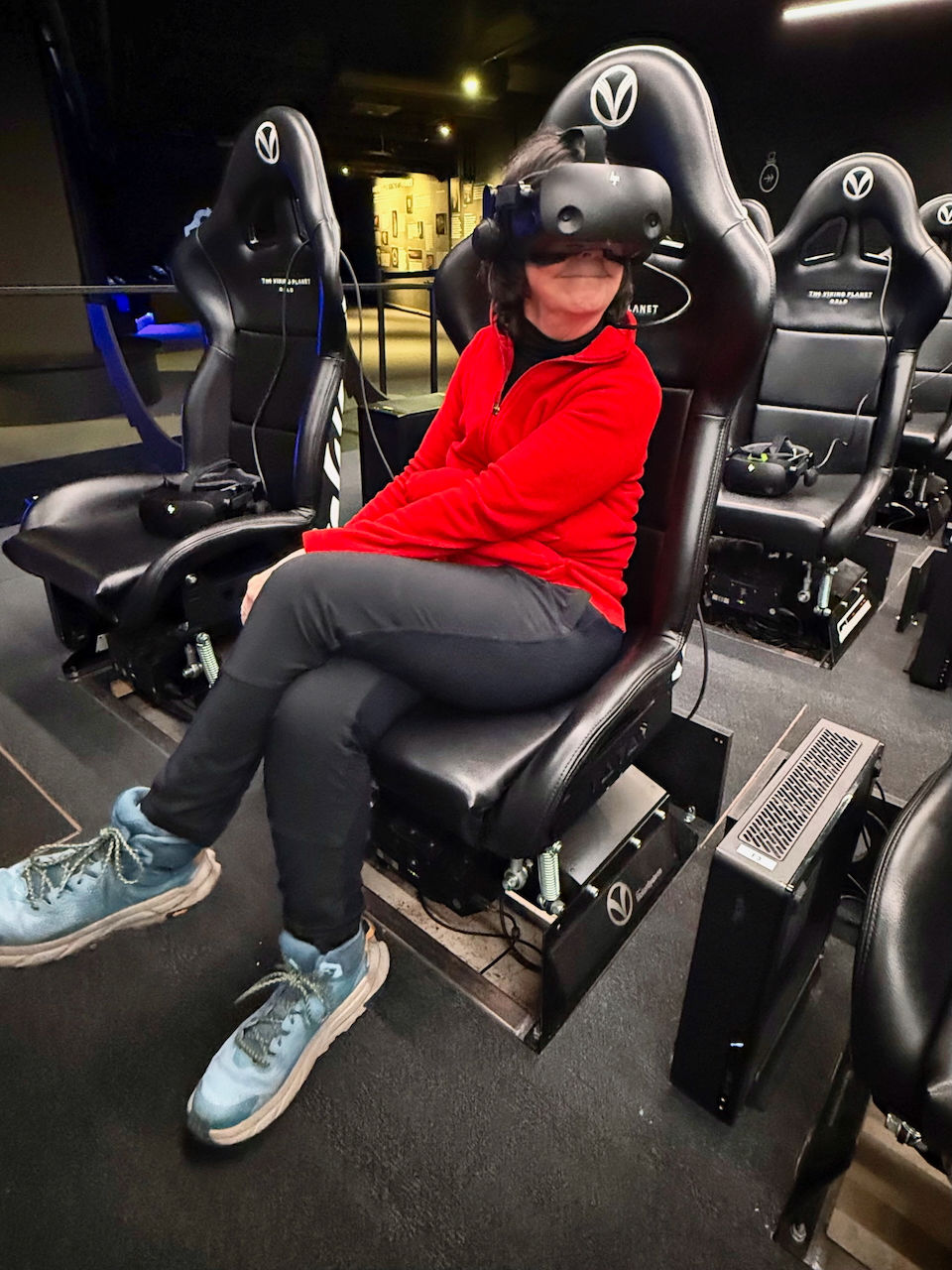
In late afternoon, we traveled by tram to the Vigland Sculpture Park, containing many stone and bronze sculptures by Oslo sculptor Gustav Vigland (who also designed the Nobel Peace Prize medal).
We devoted Wednesday, our last full day in Oslo, to things nautical and historical. We took a short boat ride across to Oslo's Bygdoy Peninsula. Three ship-themed museums are right by the dock. The first, the Maritime Museum, showcased many different kinds of fishing and small rowboats historically used in Norway.

The next building over is the Fram Polar Museum. The Fram, an iconic exploration ship was first built for legendary Norwegian explorer Fridtjof Nansen.


He was trying to map the Arctic Sea, and the Fram was built to be trapped in the ice and move with the ice pack. The voyage ultimately took three years.

The ship had a rounded hull so that the ice would pick it up rather than crushing it, and extra layers of wood were added to the sides and front, as you can see in the picture below. The interior framing was also reinforced.

The rudder and propeller (although the Fram was a sailing ship it also had a diesel engine) could be retracted up into the ship to prevent it getting mangled by the ice.

We were able to walk around, on top of, and inside the ship, which was quite spacious and had been outfitted for comfort during the long winters.

A windmill on the main deck drove a turbine that generated electricy for lights.

When Nansen was done with the ship, Roald Amundsen used it, first, to travel close to the North Pole for an expedition to the pole. When someone got there before him, Amundsen sailed it all the way to Antarctic for his successful expedition to the South Pole.

Prior to his Antarctic expedition, Amundsen had sailed a smaller ship, the Gjøa (which is also in the museum), through the Northwest Passage from the Atlantic to Pacific oceans. While on this two-year expedition, Amundsen learned many skills from the native Inuit that he later used in Antarctica.

The final museum contained the Kon-Tiki, a balsa raft that Thor Heyerdahl constructed to sail from Peru to Polynesia to try and prove his theory that people from South America could have populated Polynesia. This theory has since been disproved using genome analysis, but it was a spectacular voyage nonetheless and Heyerdahl's book about the Kon-Tiki was one of Doug's favorites as a boy.
The museum also contains the Ra II, a reed boat Heyerdahl built in the 1970s to show that Egyptians could have potentially crossed the Atlantic.

Maritime'd out, we walked to the Norwegian Folk Museum, a sort of Williamsburg of historic Norse culture and architecture. We arrived late, but were able to see the very Norwegian Stave Church...

...as well as farmhouses and barns built from timbers and covered with sod roofs.

On Thursday morning, we departed the hotel early and hauled our luggage back to Oslo's central station to start our two-day "Norway in a Nutshell" tour. This is a regular tourist thing since you get to see most elements of the Norwegian countryside.

We traveled first by train to the town of Myrdal, climbing ever higher, past beautiful lakes, and ultimately above the tree line where snow still covered the ground and the lakes were still frozen.

At Myrdal, we changed to the Flåm Scenic Railway, going down steeply from 886 meters above sea level to 2 meters above sea level in Flåm.

The railway travels through 20 tunnels, including one in which the train makes a 180 degree turn. We stopped for five minutes to take in a spectacular waterfall.
At Flåm, we boarded a hybrid catamaran for a trip through the spectacular Nærøyfjord. We had beautiful weather, and alternated our time between standing on the desk or ramps up to the roof, and basking in the warm cabin.

After a two-hour voyage, we arrived at the small town of Gudvangen, where we stayed the night in a small hotel where our room had a sod roof and Viking-themed decor. A reindeer skin covered the bed.
A waterfall misted from the cliffs high above our room.
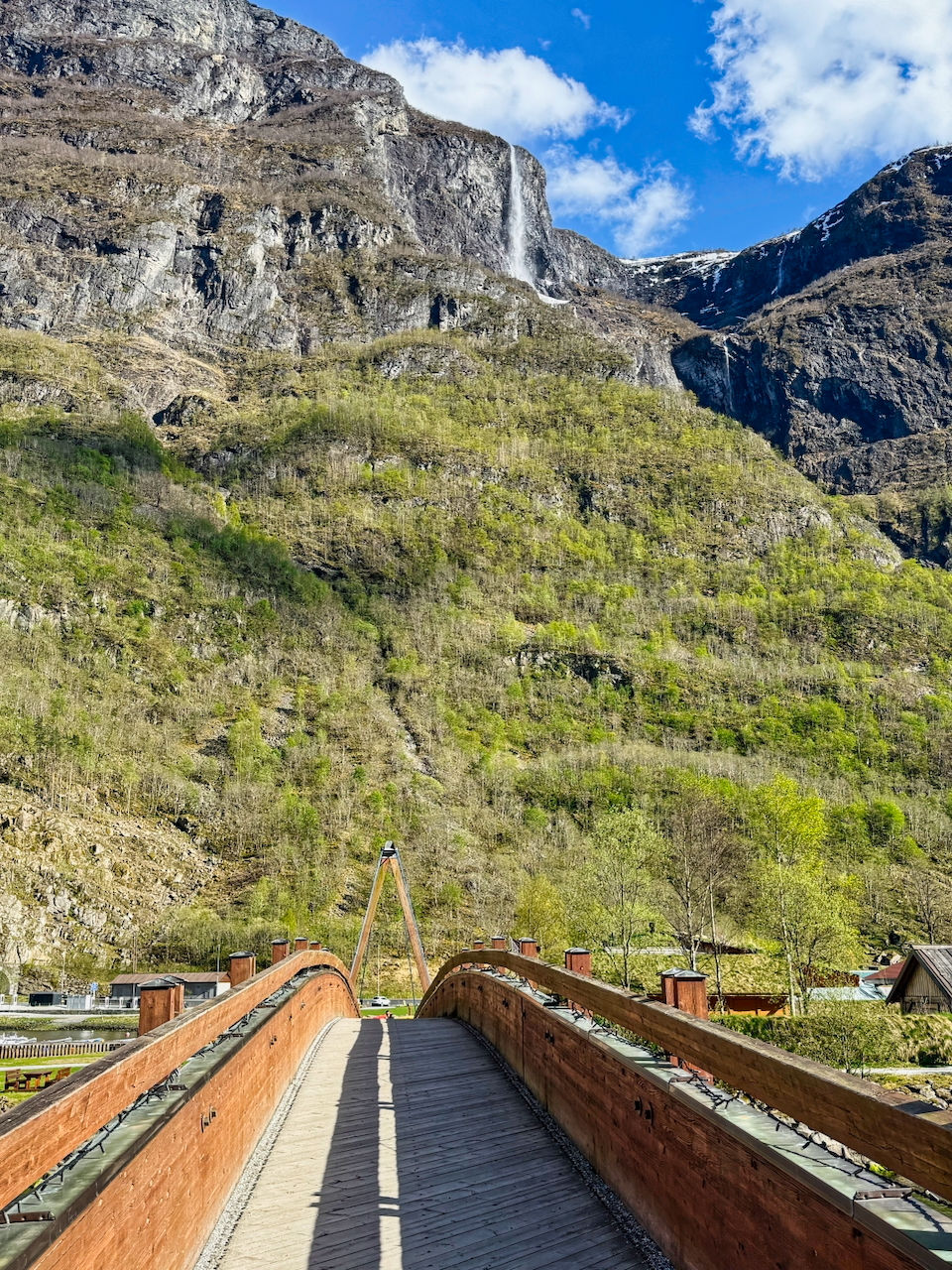
Friday morning, we breakfasted and bathed, and then boarded a bus for the next section of our trip to the village of Voss. Finally, it was back on a train to travel from Voss to Bergen on the Atlantic coast. Bergen was where we would be joining our coastal ferry and we traveled from the train station to the ferry terminal to join the ship.
More about The Coastal Express in a future blog entry.


Exploring Oslo and experiencing Norway’s breathtaking landscapes is truly unforgettable. The blend of nature and modern living makes it unique. Many travelers and students also consider management courses in Oslo, Norway to combine quality education with the opportunity to live in such an inspiring environment.
Norway's breathtaking fjords, Viking heritage, and the magical Northern Lights make it a destination unlike any other. For those pursuing executive courses in Oslo, Norway, the city offers more than world-class education — it gifts you crisp Arctic air, stunning architecture, and a culture rooted in simplicity and wonder. Sonnet 4.6